
Table of Contents
The latest LiteLLM breach should concern security leaders for reasons that go well beyond one compromised open-source project. It’s another entry in a growing list of attacks following an increasingly familiar pattern: attackers gain an initial foothold, obtain credentials, and use those secrets to expand their reach.
We’ve seen this before. We’re seeing it more frequently. And the time between initial compromise and potential damage is shrinking.
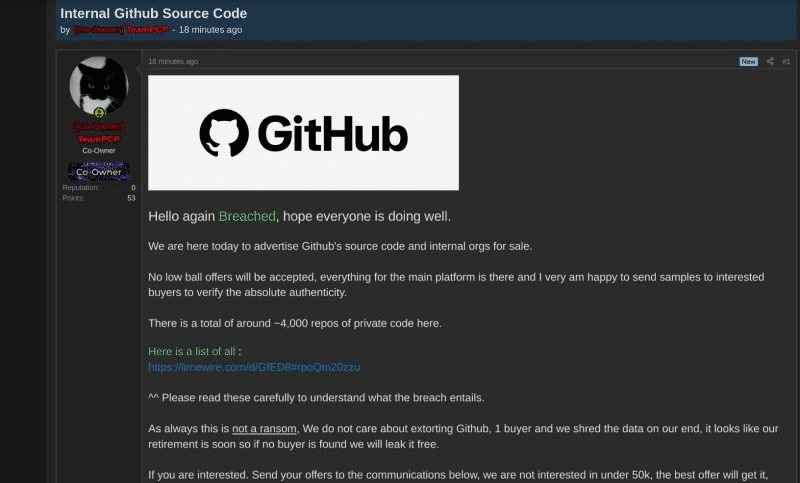
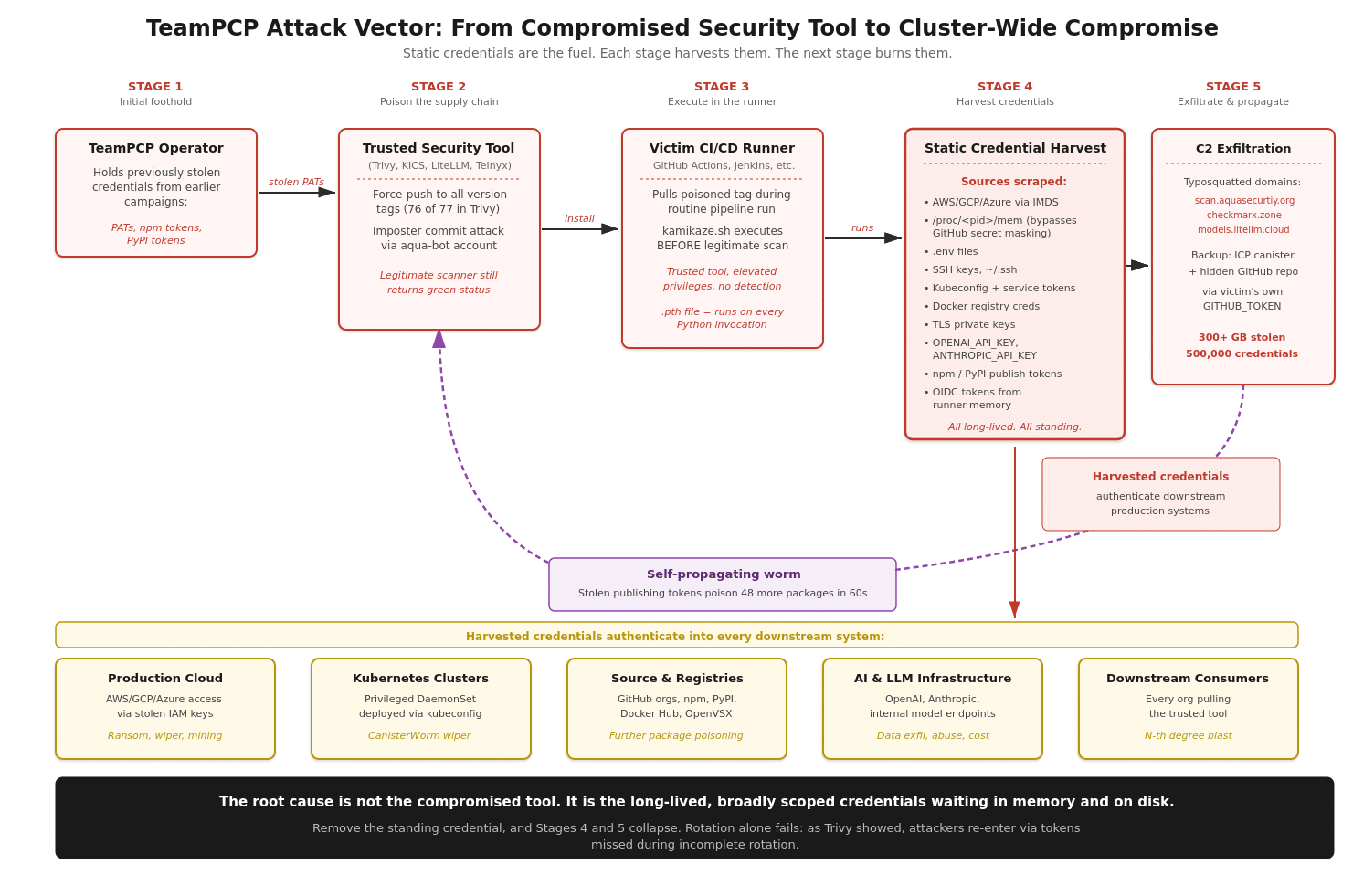
In March, LiteLLM was compromised as part of a broader software supply chain campaign that also affected projects including Trivy, Checkmarx, and Telnyx. Seven months later, on October 21, attackers compromised LiteLLM’s release pipeline again, distributing malicious software through its official channels.
Different attacks, same recurring weakness: credentials that can be stolen and reused to turn one compromised system into access to many others.
The real damage begins after the first breach
The October LiteLLM incident shows the problem clearly.
According to LiteLLM’s preliminary investigation, attackers appear to have accessed an exposed internal deployment and obtained GitHub authentication tokens from its logs. Those credentials allowed them to manipulate the release pipeline and distribute a poisoned version of the software.
The malicious release was designed to harvest additional credentials, including cloud access keys, SSH keys, AI provider secrets, and credentials stored in LiteLLM’s own proxy database.
An attacker obtains credentials from one system, uses them to compromise a trusted distribution channel, and turns that channel into a mechanism for collecting credentials from potentially many more systems.
Each successful compromise creates opportunities for the next.
The pace is accelerating
The threat landscape is changing in two ways: attackers have more potential entry points, and the tools available to exploit them are becoming far more capable.
Palo Alto Networks’ 2026 Unit 42 Incident Response Report found that identity weaknesses played a material role in nearly 90% of its investigations. It also reported that the fastest attacks in 2025 exfiltrated data at four times the previous speed.
Meanwhile, advances in AI are making sophisticated offensive capabilities more accessible. Anthropic has demonstrated that its Claude Mythos Preview model can identify and exploit previously unknown vulnerabilities across major operating systems and browsers.
As vulnerability discovery and exploitation become increasingly automated, organizations should expect less time to identify and contain an intrusion.
Preventing breaches still matters. Organizations must continue securing their software supply chains, patching vulnerabilities, and strengthening authentication.
But prevention alone is no longer a sufficient strategy.
Security leaders also need to ask a different question: When an attacker gets in, how much access can they gain, and how quickly can they expand it?
The problem is the access model
For decades, machine-to-machine access has depended heavily on secrets. API keys, service account passwords, tokens, and other credentials are embedded in applications, stored in configuration files, passed through pipelines, and sometimes exposed in logs.
That model was already difficult to secure in traditional infrastructure. Now, organizations are adding thousands of workloads, integrations, and autonomous AI agents that need access to enterprise resources.
Every additional long-lived credential creates another opportunity for theft and reuse. Every overly permissive identity increases the potential blast radius.
Since the news broke, I’ve had calls with security leaders cut short because their teams were busy dealing with the fallout. If your team is one of them, I know how hard it’s been.
Rotating compromised credentials is the right immediate response. But anyone who has done it at scale knows the pain: tracking down every key that might be exposed, pulling engineers off their work, and making sure nothing breaks along the way. And when it’s over, the underlying model is still intact. New secrets replace the old ones, in the same places, with the same exposure.
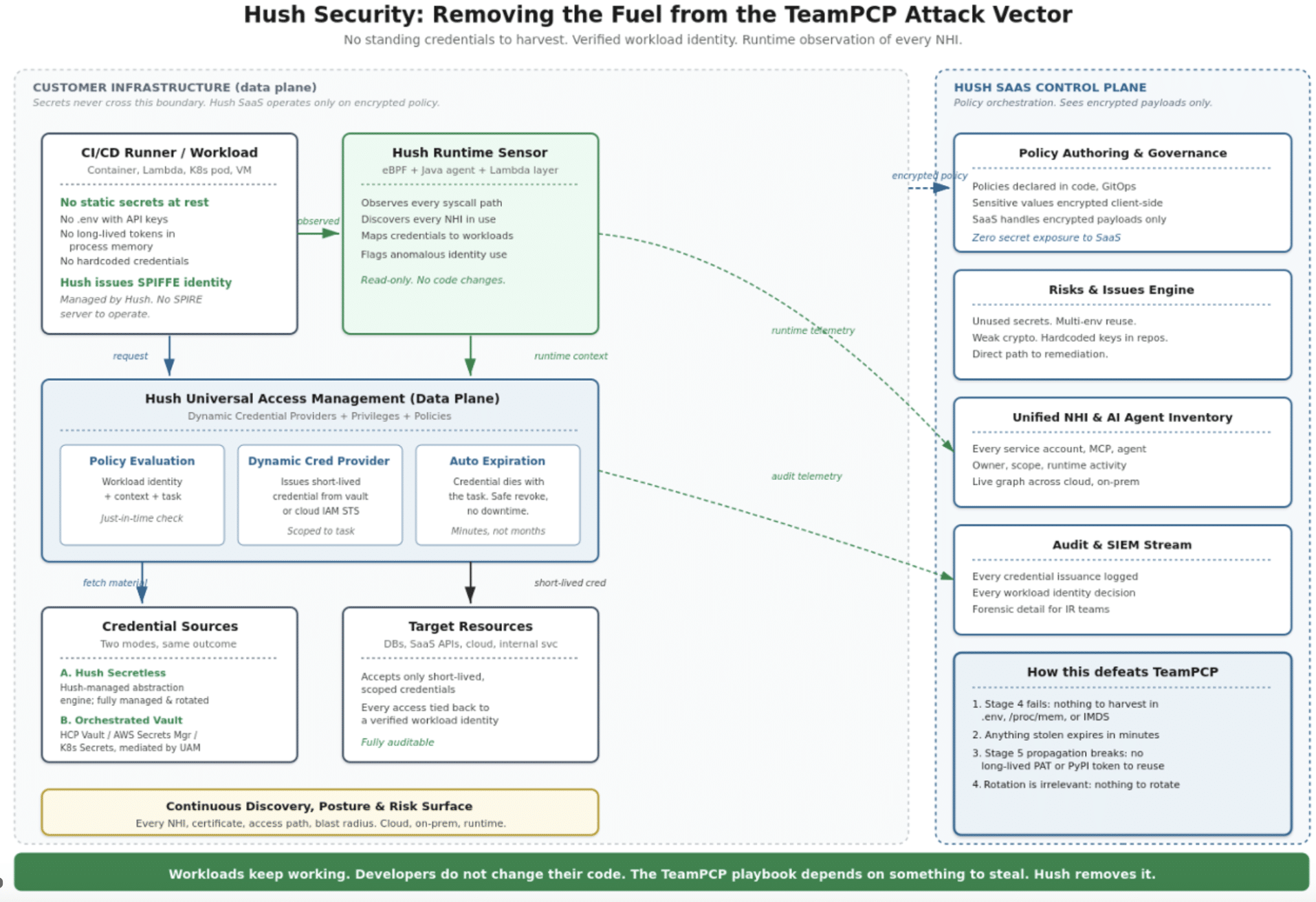
We need to reduce our dependence on reusable secrets and move toward an access model built around identity, with access continuously governed according to what each workload or agent is authorized to do.
That means:
- Verified, accountable identities: Every workload and AI agent has a distinct identity, rather than relying on shared, persistent credentials.
- Just-in-time access: Permissions and credentials are scoped to specific tasks and limited in duration, reducing their value if compromised.
- Least Agency: AI agents receive only the capabilities their tasks require, with sensitive actions subject to appropriate controls.
- Continuous runtime visibility: Organizations can see which identities access which resources, detect unusual activity, and enforce policy as access happens.
These controls cannot make a software supply chain compromise impossible. They can, however, make stolen credentials far less useful and substantially limit what an attacker can reach after gaining access.
The next breach is a matter of when
LiteLLM won’t be the last incident of this kind. Another compromised dependency, exposed token, or hijacked release pipeline will make headlines.
The immediate response will again involve investigation, patching, and credential rotation. All of those steps are necessary.
But the more important question is whether organizations will still be exposing the same reusable credentials, granting the same standing privileges, and allowing attackers the same opportunities to move from one system to the next.
As attacks become faster and more frequent, containing their impact becomes just as important as preventing the initial intrusion.
At Hush, this is the future we’re building toward: an identity-based access model for workloads and AI agents, where access is verified, scoped, and governed at runtime without relying on long-lived secrets.
The next breach may be inevitable. The chain of access after it is not.